Dumpster Rental vs. Junk Removal: Which Is Better for Your Cleanup?

Table of Contents

When you need to clear out unwanted furniture, construction debris, appliances, or household junk, two common options are dumpster rentals and junk removal services.

Both can work well, but the better disposal method depends on your project size, timeline, physical ability, available space, and how much work you want to handle yourself.

A dumpster rental gives you a container that you load during a set rental period. Full-service junk removal sends a crew to your property to handle the heavy lifting, loading, hauling, and disposal for you.

Here is how to decide which option fits your project needs.

Dumpster Rental

More Control, More DIY Work

With a dumpster rental, a roll-off container is delivered to your property for a specific rental period. You control the loading schedule and can dispose of construction debris, home renovation waste, roofing materials, yard waste, and other approved debris as your project progresses.

Full-Service Junk Removal

Less Labor, Faster Cleanup

Full-service junk removal sends a professional crew directly to your property. They handle the heavy lifting, loading, hauling, and disposal, making this option especially useful for estate cleanouts, home cleanouts, appliance disposal, bulky furniture, and single-day cleanouts.

Container sizes are generally measured in cubic yards, so choosing the appropriate size depends on the volume and type of material you expect to remove.

The main advantage is flexibility. You control the loading schedule and can dispose of material gradually rather than completing the cleanup in one visit.

The downside is that self-service loading means you are responsible for the labor. Heavy furniture, bulky furniture, appliances, demolition debris, or material located upstairs or in a basement can significantly increase loading time.

How Dumpster Rentals Work

With a dumpster rental, a roll-off container is delivered to your property for a specific rental period. You load the debris yourself, and the rental company picks up the container when you are finished.

Dumpster rentals are often useful for:

  • Home renovation projects
  • Roofing jobs
  • Construction debris
  • Building a deck
  • Full bathroom remodels
  • Landscaping overhauls
  • Long-term renovation debris
  • Large residential projects

Container sizes are generally measured in cubic yards, so choosing the appropriate size depends on the volume and type of material you expect to remove.

The main advantage is flexibility. You control the loading schedule and can dispose of material gradually rather than completing the cleanup in one visit.

The downside is that self-service loading means you are responsible for the labor. Heavy furniture, bulky furniture, appliances, demolition debris, or material located upstairs or in a basement can significantly increase loading time.

How Full-Service Junk Removal Works

Full-service junk removal takes a more hands-off approach.

Instead of renting a roll-off dumpster and loading everything yourself, a professional crew arrives at your property, removes the unwanted items, loads the truck, and hauls everything away.

This makes junk removal particularly useful for:

  • Home cleanouts
  • Estate cleanouts
  • Single-day cleanouts
  • Appliance disposal
  • Furniture removal
  • Basement and garage cleanouts
  • Moving cleanouts
  • Residential property cleanups
  • Smaller renovation projects

A full-service junk removal company can also be valuable when stair access, heavy lifting, or limited physical ability makes DIY junk removal difficult.

For many homeowners, convenience is the biggest advantage. You point out what needs to go, and the crew handles the labor requirements and hauling.
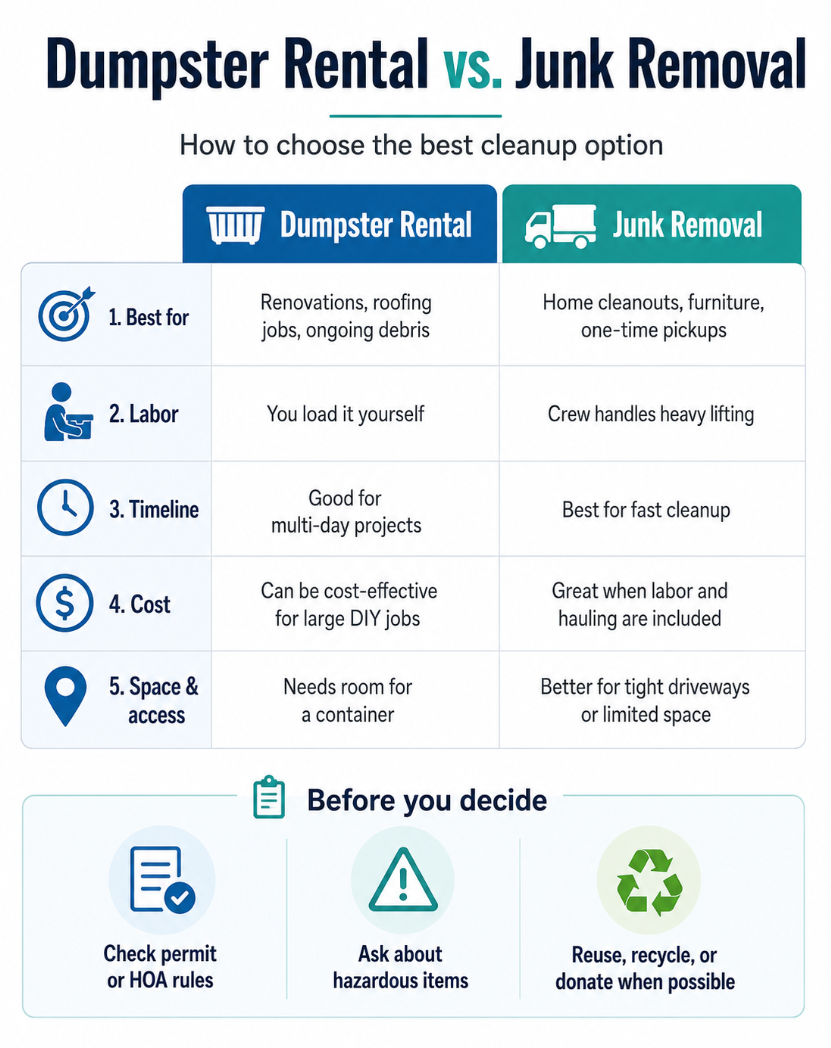
Factor Dumpster Rental Junk Removal
Labor Self-service loading and heavy lifting are usually your responsibility. The crew handles lifting, loading, hauling, and disposal.
Timeline Better for projects that generate debris over several days or weeks. Ideal for fast or single-day cleanouts.
Home Renovation Useful for ongoing renovation debris, roofing jobs, or building a deck. Excellent when construction debris is already ready for removal.
Furniture & Appliances You must move and load bulky furniture and appliances yourself. Professional crews handle the heavy furniture and appliance disposal.
Property Space Requires adequate driveway access or an approved container location. A truck normally leaves once the cleanup is finished.
Possible Extra Costs Permit fees, tipping fees, overage charges, and extra rental days may apply. Pricing depends mainly on volume, labor, access, and material type.

When a Dumpster Rental Makes More Sense

Renting a dumpster usually makes sense when debris is being generated over several days.

A home renovation is a good example. If you are completing demolition gradually, having a container available throughout the rental window allows debris to be removed as the work progresses.

Dumpster rentals can also work well when:

  • You already have workers available for loading
  • You have adequate driveway access
  • The project will generate a large volume of debris
  • You want control over the loading schedule
  • Construction debris will accumulate over time
  • You are completing roofing or landscaping work

Before scheduling a dumpster, consider local regulations.

Depending on where the container is placed, City permits, HOA restrictions, or HOA rules may apply. Containers placed on public streets may also be subject to different permit requirements than dumpsters placed entirely on private property.

You should also confirm what materials are accepted. Hazardous materials and hazardous waste generally require specialized handling and should not automatically be placed into a standard dumpster.

When Junk Removal Makes More Sense

Junk removal is usually the better fit when speed and convenience matter more than having a container on-site.

For example, an estate cleanout may include couches, mattresses, appliances, boxes, shelving, and years of accumulated household items spread across multiple floors.

Instead of carrying everything outside yourself, a full-service junk removal crew can handle the heavy lifting and removal directly from the home.

Junk removal is particularly helpful when:

  • You need everything removed quickly
  • The project involves heavy furniture
  • Items are located upstairs or in a basement
  • You do not have the physical ability to load a dumpster
  • Driveway access is limited
  • You want to avoid keeping a container on the property
  • You are preparing a home for sale or move
  • You have a single-day cleanout

This can reduce both the physical workload and the amount of time spent managing the cleanup.

What Can You Throw Away?

Whether you choose a dumpster or junk removal, not every material can be handled the same way.

Commonly accepted items may include furniture, household junk, construction debris, yard waste, appliances, and other municipal solid waste, depending on the provider and local disposal regulations.

Certain items may require special handling, including:

  • Hazardous waste
  • Paints and chemicals
  • Certain batteries
  • Electronics
  • Propane tanks
  • Some appliances
  • Automotive fluids

Always ask about restricted items before scheduling service.

Proper sorting can also create more recycling options. Recyclable materials may be taken to a recycling center or transfer station instead of going directly to a landfill.

Usable furniture, appliances, and other reusable goods may also qualify for recycling and donation through local donation centers.

Which Option Is Better for the Environment?

The disposal method itself is only part of the environmental impact.

What matters most is where the material ultimately goes.

Responsible waste management may include separating recyclable materials, identifying reusable goods, using appropriate transfer stations, and keeping hazardous materials out of ordinary waste streams.

When comparing companies, ask whether they offer recycling options or separate usable items for recycling and donation.

A professional junk removal service may also make sorting easier because the crew can identify different material types during the cleanup rather than everything being placed together in one container.

Is Junk Removal Worth It?

For many homeowners, yes—especially when labor is the biggest obstacle.

If you are physically able to load your own debris, have enough driveway space, and are working on a long-term project, renting a dumpster can be an effective option.

If you are dealing with furniture, appliances, stair access, estate cleanouts, home cleanouts, or a project that needs to be completed quickly, full-service junk removal can save significant time and effort.

The best choice comes down to four factors:

Choose a dumpster rental if:

  • You need several days to work
  • You can handle the loading
  • You have space for the container
  • Debris will accumulate throughout the project

Choose junk removal if:

  • You want the work completed quickly
  • You want someone else to handle the heavy lifting
  • The cleanup involves bulky or heavy furniture
  • You have limited space or difficult access
  • You want one crew to handle loading, hauling, and disposal

For homeowners and property managers across Long Island and New York City, 5 Star Demolition & Junk Removal provides full-service junk removal for furniture, appliances, construction debris, estate cleanouts, home cleanouts, renovation debris, and other unwanted material.

Instead of spending your weekend loading a dumpster, you can have a professional crew handle the cleanup from start to finish.

Electronics Disposal in New York: E-Waste Recycling Guide

Table of Contents

Old televisions, computers, monitors, printers, and other electronics can pile up quickly during a home cleanout, office renovation, move, or property cleanup. But in New York, getting rid of electronic equipment is not as simple as placing everything at the curb.

Many electronics are considered electronic waste, or e-waste, and New York State has specific recycling and disposal requirements designed to keep these devices out of landfills and waste facilities.

If you are clearing out a home or business on Long Island or in New York City, understanding the rules can help you dispose of unwanted electronics safely, legally, and responsibly.

What Is Considered Electronic Waste in New York?

Electronic waste generally refers to unwanted electronic devices and equipment that contain components capable of being recycled or that require special handling.

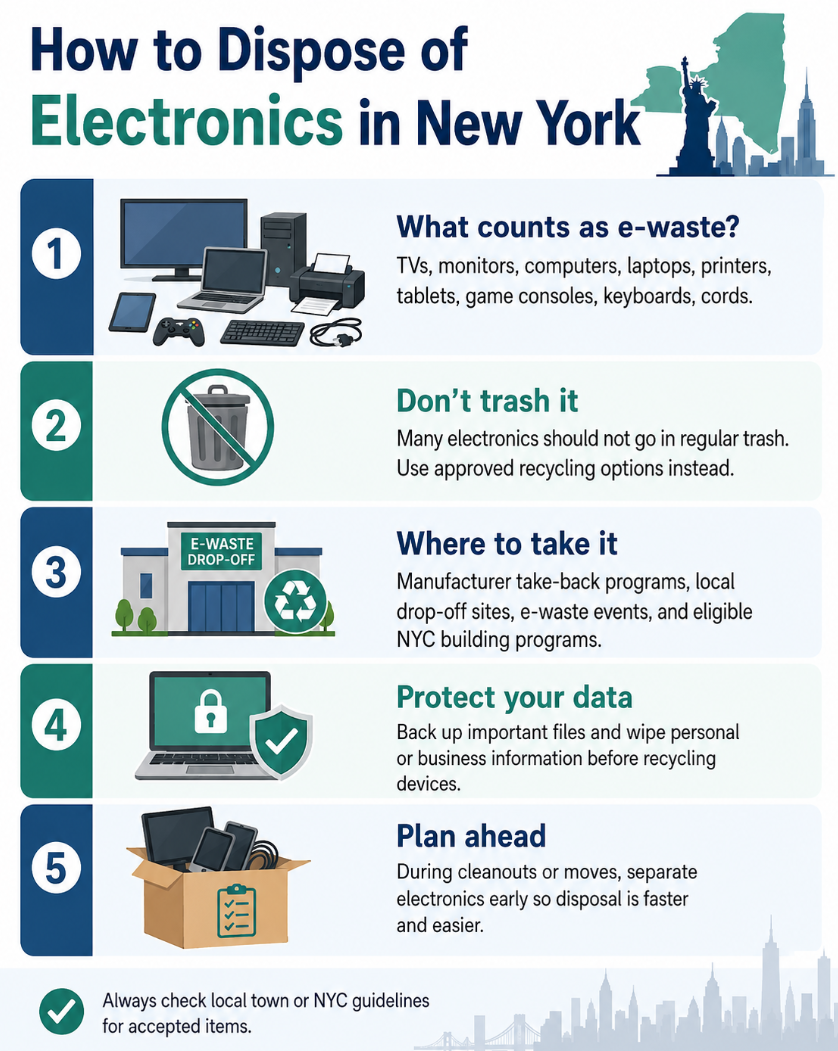
Under New York’s electronic waste rules, covered equipment can include:

  • Desktop computers and laptops
  • Computer monitors
  • Electronic keyboards and mice
  • Printers, scanners, and fax machines
  • Small-scale servers
  • Tablets and e-readers
  • Cell phones and other portable electronics
  • Televisions
  • DVD players and DVRs
  • Cable and satellite receivers
  • Video game consoles
  • External hard drives
  • Cables, cords, and wiring associated with covered electronics

The exact disposal method can depend on the type of device. Household appliances, rechargeable batteries, light bulbs, and other electronic products may fall under separate recycling or waste-management rules rather than New York’s primary e-waste program.

That distinction matters during a large cleanout. A television, refrigerator, battery, and old computer may all seem like “electronics,” but they may need to be handled differently.

Can You Throw Electronics in the Regular Trash in New York?

For many covered electronic devices, no.

New York State prohibits covered electronic waste from being disposed of with ordinary solid waste. In New York City, DSNY also states that covered electronics cannot be placed with regular trash or recycling.

That means an old TV, laptop, computer monitor, printer, or similar covered device should not simply be placed in a garbage bag or mixed into a pile headed for a landfill.

The rule exists partly because electronic devices may contain materials such as lead, mercury, cadmium, and other substances that require responsible handling. Electronics can also contain metals and components that can be recovered and reused rather than discarded.

For property owners, landlords, contractors, and businesses completing a large junk removal project, separating electronic equipment from general debris early can make the entire disposal process easier.

Where Can You Recycle Electronics in New York?

New York residents have several options for recycling unwanted electronic equipment.

One of the most common is a manufacturer takeback program. New York’s Electronic Equipment Recycling and Reuse Act requires manufacturers of covered electronic equipment to provide qualifying consumers with convenient recycling opportunities for covered devices.

Depending on where you live, additional options may include:

  • Manufacturer recycling programs
  • Retail or nonprofit electronics drop-off locations
  • Municipal recycling facilities
  • Community e-waste collection events
  • Mail-back programs
  • Local electronics recycling programs

Residents should verify that a location accepts the specific type of equipment before arriving. A recycling site that accepts computers, for example, may have different requirements for televisions, monitors, batteries, or other components.

Long Island residents should also check the recycling guidelines provided by their town or municipality because local collection and drop-off programs can vary throughout Nassau and Suffolk Counties.

How Does Electronics Disposal Work in New York City?

New York City residents have several additional options through the Department of Sanitation.

DSNY currently directs residents toward electronics drop-off locations, community e-waste events, Special Waste Drop-Off sites, SAFE Disposal Events, manufacturer takeback programs, and ecycleNYC for eligible residential buildings.

ecycleNYC is available to residential buildings with 10 or more units and provides an in-building collection option for qualifying electronics.

Working electronics may also be donated rather than recycled. Extending the life of a computer, television, tablet, or other device through reuse can reduce waste while allowing someone else to continue using equipment that still functions.

For broken or obsolete equipment, recycling is generally the better option.

What Should You Do Before Recycling Computers and Electronics?

Before getting rid of a computer, tablet, cell phone, hard drive, or other device that stores information, think about data security.

Electronic devices may contain:

  • Saved passwords
  • Financial documents
  • Personal photographs
  • Customer information
  • Business records
  • Email accounts
  • Tax documents
  • Other sensitive files

Deleting a few files or logging out of an account may not completely remove stored information.

Before recycling or disposing of data-containing equipment, back up anything you want to keep and properly erase the device. Businesses dealing with customer, employee, financial, or confidential information may need additional data-destruction procedures.

New York City also advises users of its electronics programs to erase sensitive information before turning over devices for recycling.

Businesses should be especially careful. NYC guidance states that businesses are required to recycle electronic waste, and larger businesses may need to use an electronic waste recycler rather than ordinary residential disposal programs.

Common Questions About Electronics and E-Waste Disposal

Is it illegal to dump a TV in a dumpster in New York?

A covered television should not be placed into ordinary trash or a dumpster intended for regular solid waste disposal. TVs fall within the electronic equipment covered by New York’s e-waste rules and should be directed to an appropriate recycling option.

What electronics should never be thrown away with regular trash?

Covered devices commonly include televisions, computers, laptops, monitors, printers, scanners, servers, tablets, electronic keyboards, video game consoles, DVD players, DVRs, and certain related electronic accessories.

Will NYC Sanitation pick up a TV with regular garbage?

Covered televisions cannot be placed out with normal NYC trash or recycling. Residents should use an approved electronics disposal option such as a drop-off location, collection event, manufacturer program, or another DSNY-supported e-waste program.

What about rechargeable batteries?

Rechargeable batteries have separate recycling requirements and should not automatically be treated the same as ordinary electronic equipment. Stores that sell qualifying rechargeable batteries or products containing them may be subject to New York take-back requirements.

Clearing Out Electronics During a Larger Junk Removal Project

Electronics are often only one part of a much larger cleanup.

A basement cleanout may include old televisions, furniture, boxes, broken household items, appliances, and years of accumulated clutter. An office cleanout can involve desks, filing cabinets, computers, monitors, printers, cables, and other electronic equipment. Renovations and property cleanouts can create an even larger mixture of junk and debris.

Sorting these materials before disposal helps ensure items that require recycling or special handling do not become mixed with ordinary garbage.

5 Star Demolition & Junk Removal helps homeowners, businesses, property managers, contractors, and real estate professionals throughout Long Island and the five boroughs handle larger cleanouts, junk removal projects, and demolition debris.

If electronics are part of your cleanup, let our team know when requesting your estimate so the materials involved can be reviewed and the appropriate removal and disposal options can be discussed.

Whether you are cleaning out a basement, preparing a property for sale, renovating an office, or finally getting rid of years of accumulated junk, having a plan for electronics and other specialty items can make the process faster, cleaner, and far less stressful.

How Much Does Junk Removal Cost in Nassau County?

Table of Contents

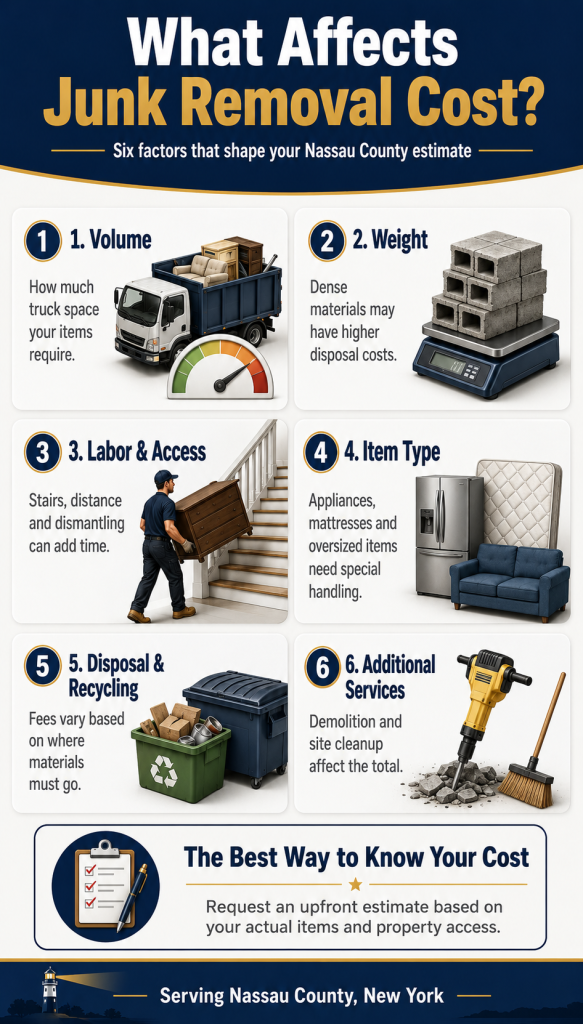
Junk removal costs in Nassau County depend on how much material you have, what you need removed, where the items are located, and how much labor the project requires. A single mattress picked up from a garage will not cost the same as a basement cleanout, construction site cleanup, or hot tub dismantling.

Recent national pricing guides place professional junk removal anywhere from approximately $60 to $800 or more, with one 2026 estimate reporting an average of about $241. These numbers can help with early budgeting, but they are not guaranteed Nassau County prices. The most accurate way to determine your cost is to request an estimate based on the actual items and working conditions.

5 Star Demo & Junk Removal provides upfront estimates for residential and commercial junk removal in Nassau County.

Typical Junk Removal Costs in Nassau County

There is no standard countywide price for junk removal. Companies establish their own rates based on truck capacity, labor, fuel costs, insurance, disposal fees, and the type of service being performed.

For general budgeting, current national junk removal data places many jobs between $60 and $700 or more. Another recent cost guide estimates a broader range of approximately $75 to $800, depending on volume, weight, location, and item type.

Nassau County customers should treat these as planning ranges—not quotes. Long Island disposal costs, travel time, property access, and the amount of labor involved can move the final price higher or lower.

Smaller pickups typically cost less than multiroom cleanouts. Full-home cleanouts, demolition debris, heavy masonry, pools, sheds, and hot tubs may exceed general junk removal ranges because they require additional workers, equipment, truck capacity, or disposal arrangements.

Factors That Affect Junk Removal Pricing

The amount of junk is usually the biggest pricing factor, but it is not the only one. An onsite estimate may consider:

  • Volume: Many junk removal services price according to how much truck space the load occupies.
  • Weight and density: Concrete, soil, bricks, roofing, and similar materials can be expensive to transport and dispose of even when they do not fill the truck.
  • Labor: Stairs, narrow hallways, long carrying distances, dismantling, and multiple workers can increase the project’s labor requirements.
  • Accessibility: Items staged in a driveway or garage are generally easier to remove than furniture stored in a basement, attic, apartment, or backyard.
  • Item type: Refrigerators, mattresses, televisions, appliances, hot tubs, pools, and oversized furniture may require special handling.
  • Disposal and recycling fees: Transfer stations and recycling facilities may charge according to material type or weight.
  • Location: Travel time, parking restrictions, and access conditions can affect jobs in communities such as Great Neck, Port Washington, Hempstead, and Long Beach.
  • Additional services: Demolition, construction cleanup, or equipment use will normally be priced differently from ordinary household junk removal.

A professional price also accounts for the crew, vehicle, fuel, insurance, licensing, and responsible disposal—not simply the time spent loading the truck.

How Junk Removal Companies Structure Their Prices

The most common pricing method for full-service junk removal is truck volume. A company may quote a minimum load, partial truck, half truck, three-quarter truck, or full truckload. This model works well when a customer has furniture, boxes, household clutter, appliances, and mixed rubbish.

Single-item pricing may be used for one mattress, refrigerator, washer, dryer, sofa, or television. Even then, many companies have a minimum service fee to cover sending a truck and professional crew to the property.

Projects involving construction debris removal, shed removal, hot tub dismantling, pools, or interior and exterior cleanups may be priced by the overall project. These estimates account for demolition labor, equipment, material weight, loading, transportation, and disposal.

Before approving service, ask whether the estimate includes labor, loading, cleanup, fuel, and disposal fees.

How Different Projects Can Change the Cost

Furniture removal is often priced according to the number and size of the pieces. A couch located near an exterior door takes less time to remove than a large sectional that must be dismantled and carried down stairs.

Appliance removal may involve refrigerators, washers, dryers, ovens, and similar bulky equipment. Refrigerators and certain appliances can require specialized recycling because of their components.

An estate cleanout can involve several rooms, furniture removal, appliances, personal belongings, storage areas, and outdoor debris. Pricing will reflect the volume and time required to clear the property carefully.

Construction site cleanups often cost more than ordinary household removal because drywall, lumber, roofing, concrete, and masonry can be heavy. Projects involving sheds, pools, or hot tubs may also require demolition services before the material can be loaded.

Electronics may need to be separated from ordinary rubbish. The New York State Department of Environmental Conservation explains which devices fall under the state’s electronic waste recycling requirements.

5 Star Demo & Junk Removal

Full-Service Removal vs. Dumpster Rental or DIY Disposal

Full-service junk removal includes a professional team that performs the heavy lifting, loading, hauling, and cleanup. It is often the most convenient option for furniture removal, appliance disposal, estate cleanouts, construction debris, and projects with limited time.

A dumpster may make sense when debris will be produced gradually over several days. However, customers must load it themselves, protect the driveway, follow weight restrictions, and determine whether local placement rules apply.

DIY disposal may appear cheapest when you already own a suitable truck and only have a small load. Remember to consider fuel, vehicle wear, transfer-station fees, lifting risks, and the time required to sort and transport everything. Hazardous chemicals cannot be included with ordinary junk and should be directed to an authorized household hazardous-waste facility.

How to Reduce Your Junk Removal Costs

A little preparation can help you get a more accurate estimate and avoid paying for unnecessary volume.

Group everything you want removed in clearly identified areas. Break down empty cardboard boxes, but do not dismantle heavy furniture unless you can do so safely. Separate personal belongings from the junk so the crew does not have to wait while decisions are made.

Include all items when requesting an estimate. Adding a basement, shed, or second pile after the team arrives may change the original price. Combining multiple furniture pieces, appliances, and household items into one scheduled pickup may also be more efficient than booking several minimum-charge visits.

Photographs can help with an initial estimate, but large or complicated projects may still require an onsite assessment.

Frequently Asked Questions

What is the minimum charge for junk removal in Nassau County?
Minimum charges vary by company. They generally cover the cost of sending a truck and crew, loading a small amount of material, transportation, and standard disposal.

What is included in a $99 junk removal service?
A $99 offer is usually a promotional or minimum-load price with specific limitations. It may cover one standard item or a very small curbside pickup. Ask what items, labor, disposal fees, and volume are included before scheduling.

Can a company provide an exact price over the phone?
Pictures and descriptions can help produce an initial estimate. An exact price may require seeing the volume, weight, access conditions, and materials onsite.

Is full-service junk removal cheaper than renting a dumpster?
It depends on the project. Full-service removal may be more economical for a quick cleanup because labor and hauling are included. A dumpster may work better when a customer is comfortable loading debris over several days.

How can I get a junk removal estimate in Nassau County?
Contact 5 Star Demo & Junk Removal with a list or photographs of the items. For larger cleanouts, construction debris, or demolition work, an onsite estimate may provide the most accurate price.

Call (929) 310-5844 or request a free estimate for junk removal throughout Nassau County and surrounding Long Island communities.