Table of Contents
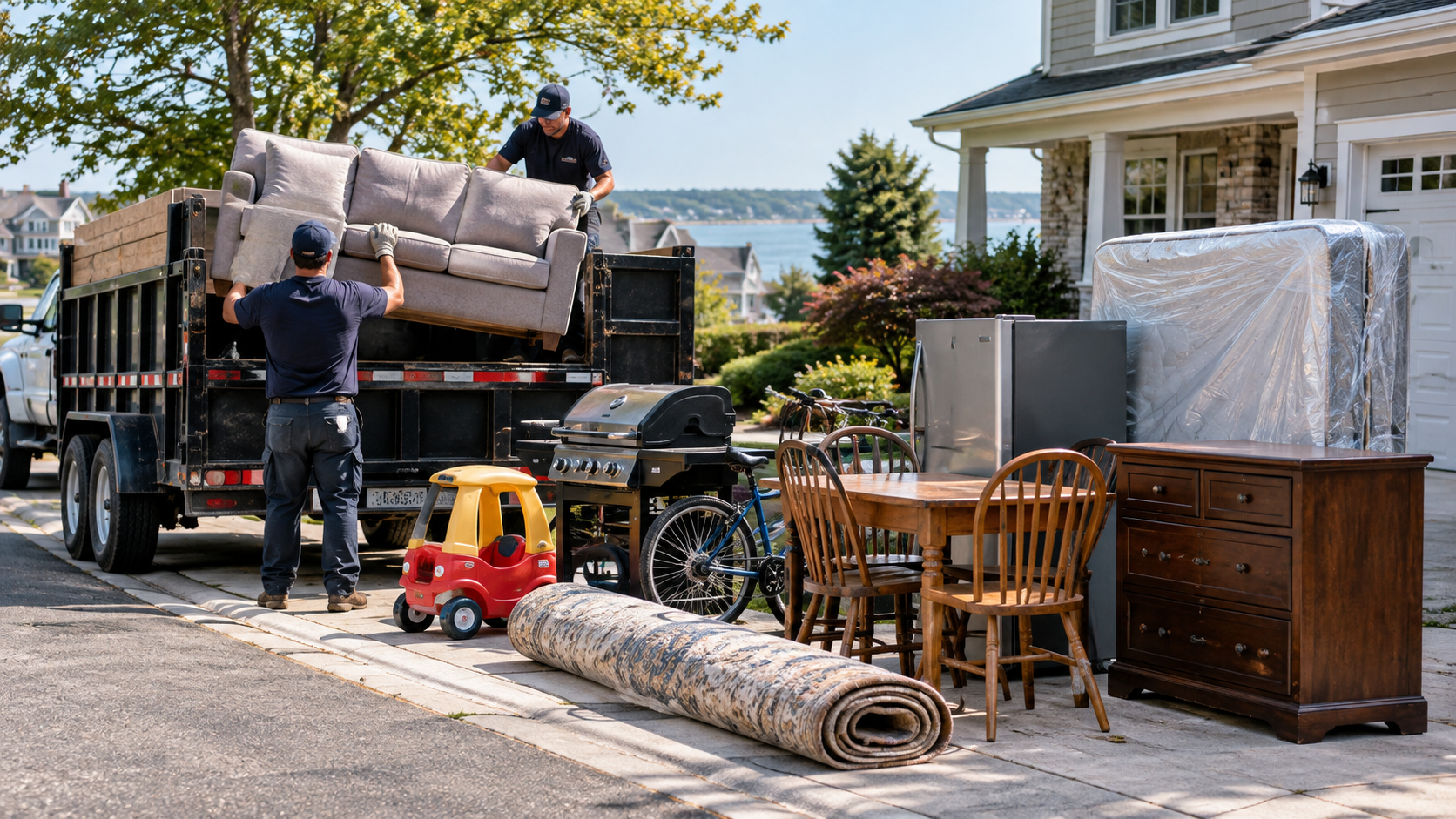
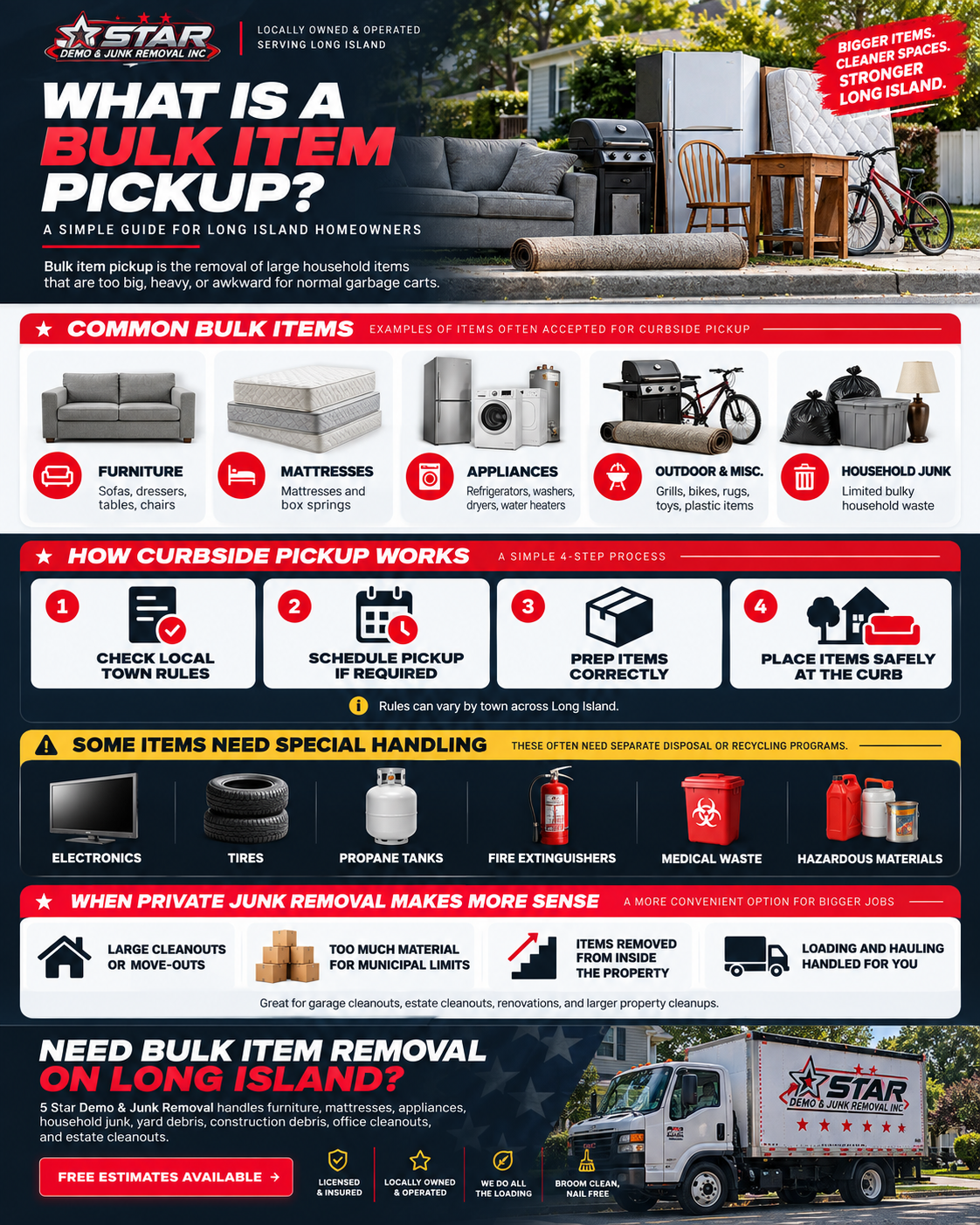
A bulk item pickup is a collection service for large household items that are too big, heavy, or awkward to fit inside normal garbage carts. Common examples include sofas, mattresses, tables, chairs, large metal items, BBQ grills, rugs, children’s toys, and certain household appliances. Depending on where you live, bulk pick-up may be handled through a local Department of Sanitation, municipal curbside services, or a private removal service.
Bulk item disposal rules can vary across Long Island. Some towns allow a limited number of bulky items on a regular trash pick-up day, while others require residents to schedule pickup in advance. Large cleanouts, construction debris, electronics, and specialty items may require a different disposal method.
What Items Are Included in Bulk Item Collection?
Bulk item collection usually covers oversized residential waste that cannot fit into a standard recycling container or garbage cart. Furniture is one of the most common categories and may include couches, dressers, bed frames, tables, chairs, and large table tops. Mattresses and box springs are also common bulk items, although some sanitation departments require a mattress bag before curbside collection.
Large appliances may require separate handling. Refrigerators, freezers, air conditioners, washers, dryers, water heaters, and similar items may be collected as large metal items or through an appliance recycling program. Appliances containing refrigerants can have additional preparation requirements before they are accepted.
Other bulky waste may include plastic items, outdoor furniture, BBQ grills, bicycles, large children’s toys, and limited quantities of household junk. Each municipality decides which items qualify, how many cubic yards or individual items can be placed out, and whether residents need to schedule a separate pickup slot.
How Does Curbside Bulk Pickup Work?
Municipal bulk pickup usually requires residents to follow local curbside collection rules. Items may need to be placed at the curb the evening before or morning of the scheduled collection day. Some towns offer regular bulk collection, while others require residents to schedule pickup through sanitation or Waste Management services.
Preparation rules are important. Mattresses may need to be enclosed in a mattress bag. Large metal items may need to be separated from other bulk trash. Refrigerators may require doors to be removed, and certain appliances may need refrigerant recovery before collection. Items should also be placed where crews can reach them safely without blocking sidewalks, streets, or a driveway apron.
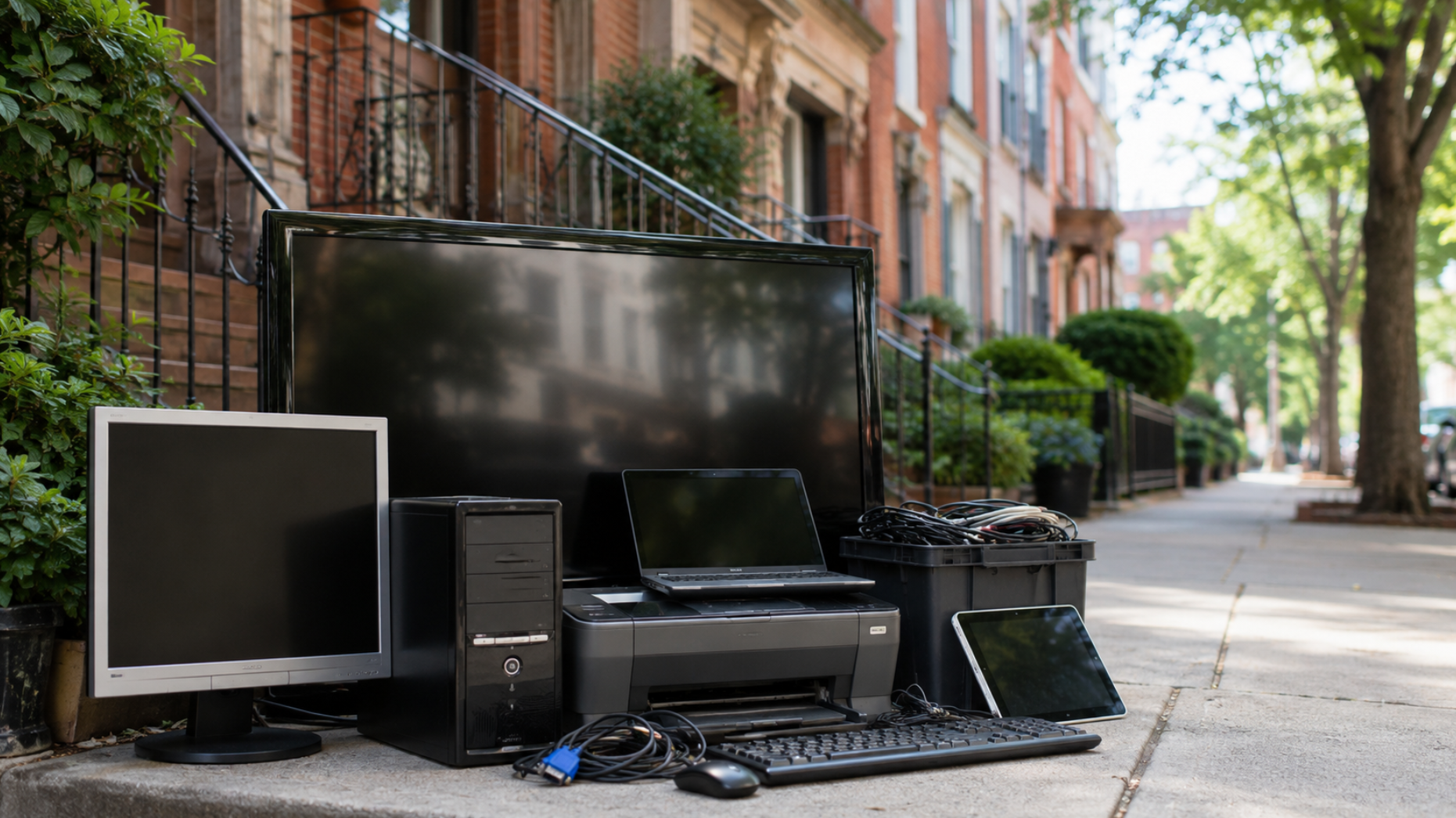
Electronics often follow separate disposal rules. Computer devices, televisions, monitors, and other electronic devices may need to go through an electronics disposal or recycling center instead of normal garbage collection. Tires, propane tanks, fire extinguishers, medical waste, and hazardous materials may also require separate programs or transfer station drop-off.
When a Private Removal Service Makes More Sense
Curbside bulk collection works well for a few household items, but it is not designed for every cleanup. Municipal programs may limit the number of pieces, cubic yards, or pickup frequency. Homeowners completing a garage cleanout, estate cleanout, basement cleanout, move-out, renovation, or large property cleanup can quickly exceed those limits.
A private removal service can collect items directly from inside the home, garage, yard, office, or commercial property. This removes the need to move heavy furniture to the curb or wait for a specific trash pick-up day.
Professional junk removal is also useful when items need to be separated for disposal, recycling, or transfer. Metal items may be taken to recycling centers, while appliances and electronics may require specialized handling. Food waste, medical waste, propane tanks, and other restricted materials should never be mixed casually with ordinary bulk trash because disposal requirements differ.
When a Private Removal Service Makes More Sense
Curbside bulk collection works well for a few household items, but it is not designed for every cleanup. Municipal programs may limit the number of pieces, cubic yards, or pickup frequency. Homeowners completing a garage cleanout, estate cleanout, basement cleanout, move-out, renovation, or large property cleanup can quickly exceed those limits.
A private removal service can collect items directly from inside the home, garage, yard, office, or commercial property. This removes the need to move heavy furniture to the curb or wait for a specific trash pick-up day.
Professional junk removal is also useful when items need to be separated for disposal, recycling, or transfer. Metal items may be taken to recycling centers, while appliances and electronics may require specialized handling. Food waste, medical waste, propane tanks, and other restricted materials should never be mixed casually with ordinary bulk trash because disposal requirements differ.