Table of Contents
Old televisions, computers, monitors, printers, and other electronics can pile up quickly during a home cleanout, office renovation, move, or property cleanup. But in New York, getting rid of electronic equipment is not as simple as placing everything at the curb.
Many electronics are considered electronic waste, or e-waste, and New York State has specific recycling and disposal requirements designed to keep these devices out of landfills and waste facilities.
If you are clearing out a home or business on Long Island or in New York City, understanding the rules can help you dispose of unwanted electronics safely, legally, and responsibly.
What Is Considered Electronic Waste in New York?
Electronic waste generally refers to unwanted electronic devices and equipment that contain components capable of being recycled or that require special handling.
Under New York’s electronic waste rules, covered equipment can include:
- Desktop computers and laptops
- Computer monitors
- Electronic keyboards and mice
- Printers, scanners, and fax machines
- Small-scale servers
- Tablets and e-readers
- Cell phones and other portable electronics
- Televisions
- DVD players and DVRs
- Cable and satellite receivers
- Video game consoles
- External hard drives
- Cables, cords, and wiring associated with covered electronics
The exact disposal method can depend on the type of device. Household appliances, rechargeable batteries, light bulbs, and other electronic products may fall under separate recycling or waste-management rules rather than New York’s primary e-waste program.
That distinction matters during a large cleanout. A television, refrigerator, battery, and old computer may all seem like “electronics,” but they may need to be handled differently.
Can You Throw Electronics in the Regular Trash in New York?
For many covered electronic devices, no.
New York State prohibits covered electronic waste from being disposed of with ordinary solid waste. In New York City, DSNY also states that covered electronics cannot be placed with regular trash or recycling.
That means an old TV, laptop, computer monitor, printer, or similar covered device should not simply be placed in a garbage bag or mixed into a pile headed for a landfill.
The rule exists partly because electronic devices may contain materials such as lead, mercury, cadmium, and other substances that require responsible handling. Electronics can also contain metals and components that can be recovered and reused rather than discarded.
For property owners, landlords, contractors, and businesses completing a large junk removal project, separating electronic equipment from general debris early can make the entire disposal process easier.
Where Can You Recycle Electronics in New York?
New York residents have several options for recycling unwanted electronic equipment.
One of the most common is a manufacturer takeback program. New York’s Electronic Equipment Recycling and Reuse Act requires manufacturers of covered electronic equipment to provide qualifying consumers with convenient recycling opportunities for covered devices.
Depending on where you live, additional options may include:
- Manufacturer recycling programs
- Retail or nonprofit electronics drop-off locations
- Municipal recycling facilities
- Community e-waste collection events
- Mail-back programs
- Local electronics recycling programs
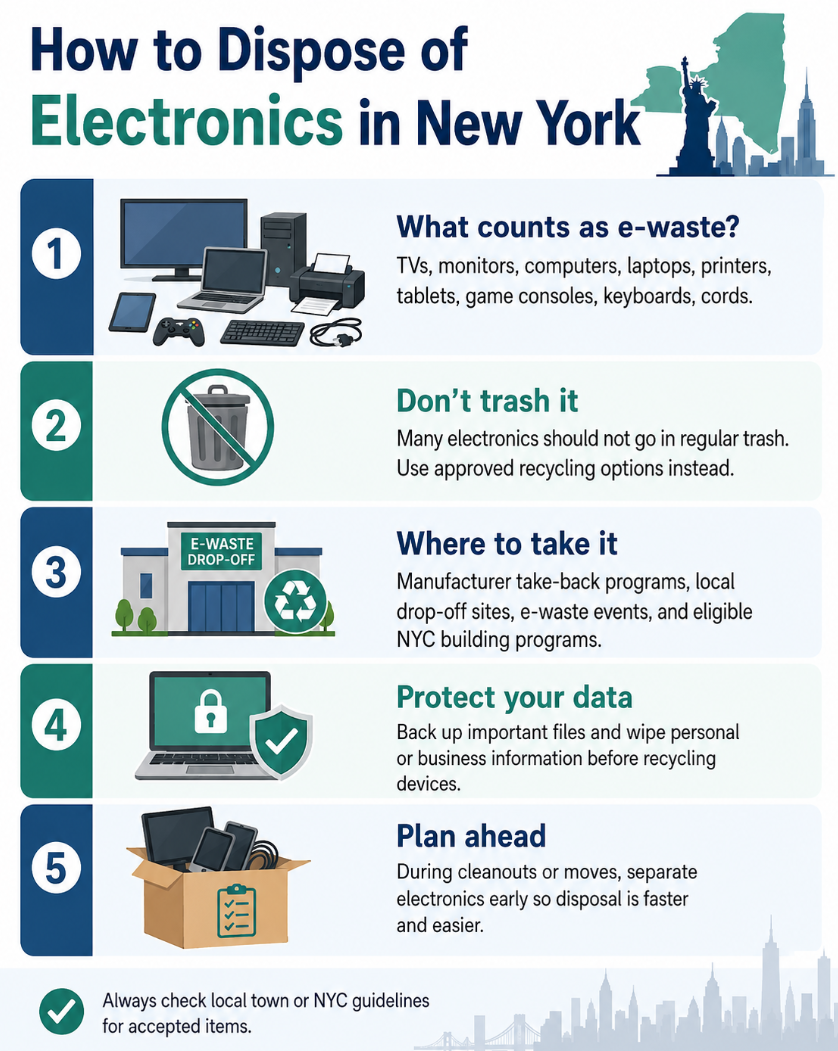
Residents should verify that a location accepts the specific type of equipment before arriving. A recycling site that accepts computers, for example, may have different requirements for televisions, monitors, batteries, or other components.
Long Island residents should also check the recycling guidelines provided by their town or municipality because local collection and drop-off programs can vary throughout Nassau and Suffolk Counties.
How Does Electronics Disposal Work in New York City?
New York City residents have several additional options through the Department of Sanitation.
DSNY currently directs residents toward electronics drop-off locations, community e-waste events, Special Waste Drop-Off sites, SAFE Disposal Events, manufacturer takeback programs, and ecycleNYC for eligible residential buildings.
ecycleNYC is available to residential buildings with 10 or more units and provides an in-building collection option for qualifying electronics.
Working electronics may also be donated rather than recycled. Extending the life of a computer, television, tablet, or other device through reuse can reduce waste while allowing someone else to continue using equipment that still functions.
For broken or obsolete equipment, recycling is generally the better option.
What Should You Do Before Recycling Computers and Electronics?
Before getting rid of a computer, tablet, cell phone, hard drive, or other device that stores information, think about data security.
Electronic devices may contain:
- Saved passwords
- Financial documents
- Personal photographs
- Customer information
- Business records
- Email accounts
- Tax documents
- Other sensitive files
Deleting a few files or logging out of an account may not completely remove stored information.
Before recycling or disposing of data-containing equipment, back up anything you want to keep and properly erase the device. Businesses dealing with customer, employee, financial, or confidential information may need additional data-destruction procedures.
New York City also advises users of its electronics programs to erase sensitive information before turning over devices for recycling.
Businesses should be especially careful. NYC guidance states that businesses are required to recycle electronic waste, and larger businesses may need to use an electronic waste recycler rather than ordinary residential disposal programs.
Common Questions About Electronics and E-Waste Disposal
Is it illegal to dump a TV in a dumpster in New York?
A covered television should not be placed into ordinary trash or a dumpster intended for regular solid waste disposal. TVs fall within the electronic equipment covered by New York’s e-waste rules and should be directed to an appropriate recycling option.
What electronics should never be thrown away with regular trash?
Covered devices commonly include televisions, computers, laptops, monitors, printers, scanners, servers, tablets, electronic keyboards, video game consoles, DVD players, DVRs, and certain related electronic accessories.
Will NYC Sanitation pick up a TV with regular garbage?
Covered televisions cannot be placed out with normal NYC trash or recycling. Residents should use an approved electronics disposal option such as a drop-off location, collection event, manufacturer program, or another DSNY-supported e-waste program.
What about rechargeable batteries?
Rechargeable batteries have separate recycling requirements and should not automatically be treated the same as ordinary electronic equipment. Stores that sell qualifying rechargeable batteries or products containing them may be subject to New York take-back requirements.
Clearing Out Electronics During a Larger Junk Removal Project
Electronics are often only one part of a much larger cleanup.
A basement cleanout may include old televisions, furniture, boxes, broken household items, appliances, and years of accumulated clutter. An office cleanout can involve desks, filing cabinets, computers, monitors, printers, cables, and other electronic equipment. Renovations and property cleanouts can create an even larger mixture of junk and debris.
Sorting these materials before disposal helps ensure items that require recycling or special handling do not become mixed with ordinary garbage.
5 Star Demolition & Junk Removal helps homeowners, businesses, property managers, contractors, and real estate professionals throughout Long Island and the five boroughs handle larger cleanouts, junk removal projects, and demolition debris.
If electronics are part of your cleanup, let our team know when requesting your estimate so the materials involved can be reviewed and the appropriate removal and disposal options can be discussed.
Whether you are cleaning out a basement, preparing a property for sale, renovating an office, or finally getting rid of years of accumulated junk, having a plan for electronics and other specialty items can make the process faster, cleaner, and far less stressful.